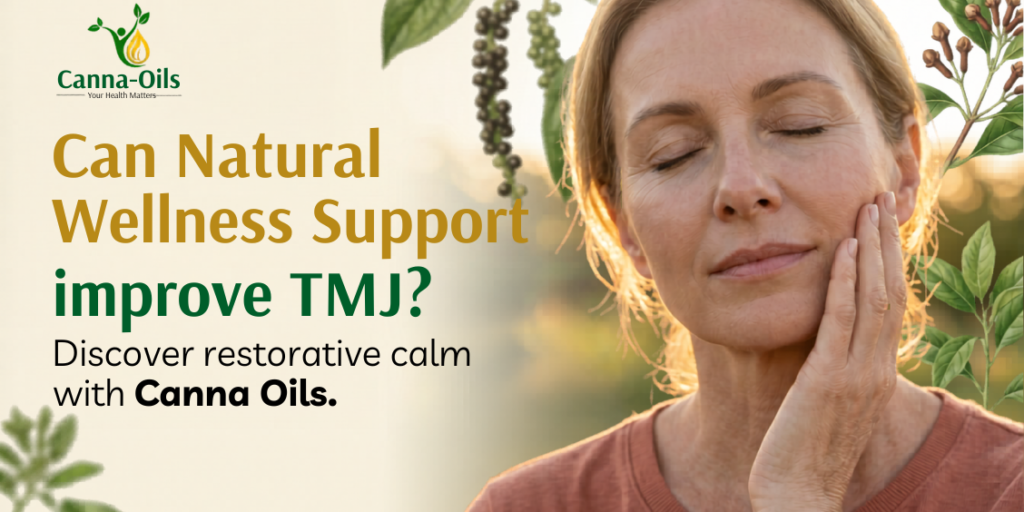
I’ve been noticing something lately at the markets. More and more people — especially women — are mentioning a condition called TMJ. Somewhere in the conversation they’ll say “I’ve got TMJ, do you think anything here might help me?”
And honestly? After about the 4th or 5th conversation, it got me curious enough to dig into the research. So I thought it was time to get this blog done!
Understanding TMJ
So What Actually Is It?
TMJ stands for the temporomandibular joint — that’s the hinge on either side of your jaw that connects it to your skull. When people say they “have TMJ,” what they usually mean is they’re experiencing a temporomandibular disorder, or TMD. That’s a broader category of jaw joint and jaw muscle problems that can show up as jaw pain, clicking or popping, a jaw that locks, difficulty opening wide, headaches, or pain that radiates into the neck and face.
I found that it’s more common than a lot of people realise (including myself), and it does seem to affect women significantly more than men — research published in Scientific Reports (2025) found that women experience TMD onset more frequently and recover less often than men, and a meta-analysis in JOMS found women have roughly twice the risk of developing it compared to men. Ladies, we need to talk!
First Steps
What Do People Usually Do About It?
Most of the evidence-based guidance around TMJ starts conservatively — which I actually think is great. The first line of approach isn’t surgery or big interventions. It’s things like: resting the jaw (no talking — haha), eating softer foods for a while, avoiding chewing gum or nail biting, applying warmth, getting better sleep, managing stress, and doing gentle physical therapy or jaw exercises under guidance. Cognitive behavioural therapy also shows up in the research for people whose symptoms seem closely tied to stress and tension.
That last point is really important. And it brings me to why I think some of our products might genuinely be part of a broader self-care approach for people dealing with this.
The Research
The Stress and Anxiety Connection Is Real
Here’s something I noticed the research keeps pointing to: TMJ and stress aren’t just loosely related — they’re closely linked.
What the studies say
A 2025 review published in the Journal of Craniomandibular Practice found that psychosocial factors including stress and anxiety play a significant role in the onset and progression of TMD. The same review noted that anxiety can trigger the release of neurotransmitters associated with parafunctional habits like jaw clenching and bruxism (teeth grinding), leading to muscle overload in the jaw.
A systematic review in Frontiers in Psychiatry (2022) found that patients with TMD consistently showed higher anxiety levels than those without, and that anxiety can actively alter pain perception and increase muscle hyperactivity around the TMJ.
The more wound up your nervous system is, the more your jaw seems to know about it.
Canna-Oils & BCP
Could a Terpene Oil Support Your Wellbeing When You’re Dealing With TMJ?
I want to be upfront here: our products are wellness support products, not treatments or medicines. I’m definitely not claiming they’ll fix your jaw. But when someone at the markets asks me whether something from the Canna-Oils range might help them, I think about what they’re actually struggling with — and for a lot of TMJ sufferers, stress, tension, poor sleep, and that underlying anxious “switched-on” feeling seem to be major contributors.
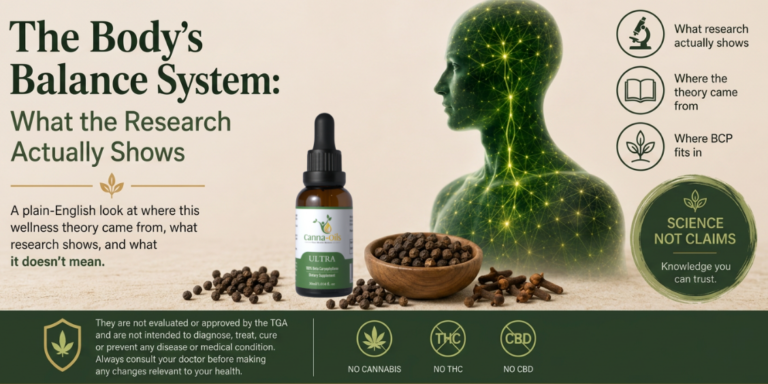
That’s where I genuinely think our Ultra BCP Oil might have a role as part of a broader self-care routine. Beta-Caryophyllene (BCP) is a naturally occurring terpene found in thousands of plants like black pepper, cloves, and copaiba. It works by selectively binding to CB2 receptors in the body’s endocannabinoid system — and there is growing research looking at what that means for stress and calm.
The BCP research
A 2014 study published in Physiology & Behavior found that BCP demonstrated anxiolytic-like effects driven through CB2 receptor activity — notably without the sedation or motor impairment associated with other compounds!
A 2020 laboratory-based study published in Natural Product Communications found BCP exerted a dose-dependent calming effect in test models, with antioxidant activity also observed.
Researchers have noted that BCP’s mechanism — targeting CB2 receptors to help regulate the body’s stress response — may support relaxation and a sense of calm. A calmer nervous system may mean a more relaxed jaw. That’s not a medical claim — it’s just sensible wellness logic, backed by some genuinely interesting science.
Practical Self-Care
Simple Self-Care Steps Worth Trying
Based on what the research supports as the safest starting points for TMJ, here’s a practical list of gentle self-care measures:
- Soft foods for a short period — give your jaw a genuine rest
- Avoid jaw overloading — no hard chewing, no gum, no biting your nails or pen lids
- Warmth — a warm compress on the jaw and neck can help ease muscle tension
- Jaw awareness — notice if you’re clenching during the day and consciously relax
- Sleep hygiene — poor sleep and jaw grinding often go hand in hand
- Stress management — anything that genuinely calms your nervous system is a win
- Gentle movement — if a physio or dentist can show you some jaw exercises, these can help
- Relaxation practices — time in nature, a long bath — whatever works for you
And if you’re someone who’s been looking for a plant-based addition to that stress-and-tension toolkit, it might be worth exploring our Ultra BCP Oil as part of your routine.
A Note
Before You Go
If you’re dealing with significant jaw pain, locking, or symptoms that are affecting your daily life, please do see your dentist or GP. TMJ can have different underlying causes — some more muscle-related, some more joint-related — and a professional can help work out what’s going on for you specifically.
What we offer is a natural, wellness-focused product range that supports people who are looking to feel a little calmer, a little less tense, and a little more themselves. If that sounds like it could be useful for where you’re at, we’d love to help.
Try Ultra BCP Oil
Lab-tested for purity and made with a lot of care from our family to yours.
Shop Ultra BCP Oil
References
- Svensson, P. et al. (2025). Women are worse off in developing and recovering from temporomandibular disorder symptoms. Scientific Reports. nature.com
- Bueno, C.H. et al. (2018). Gender differences in temporomandibular disorders in adult populational studies: A systematic review and meta-analysis. Journal of Oral Rehabilitation / PubMed. pubmed.ncbi.nlm.nih.gov
- Zhou Lab / Western University (2025). Correlation Between Temporomandibular Disorder and Mental Health. research.westernu.edu
- Ferretti, F. et al. (2022). Association between temporomandibular disorders and anxiety: A systematic review. Frontiers in Psychiatry. frontiersin.org
- Bahi, A. et al. (2014). β-Caryophyllene, a CB2 receptor agonist produces multiple behavioral changes relevant to anxiety and depression in mice. Physiology & Behavior. sciencedirect.com
- Machado, K. et al. (2020). Anxiety Therapeutic Interventions of β-Caryophyllene: A Laboratory-Based Study. Natural Product Communications. journals.sagepub.com
Disclaimer: Canna-Oils products are wellness support products and are not intended to diagnose, treat, cure, or prevent any medical condition. Always consult a qualified healthcare professional for medical advice.