Muscle Inflammation
Muscle Inflammation Last week, we talked about workout recovery. We looked at the effect of sleep and stress on our recovery and how Canna Oils BCP could

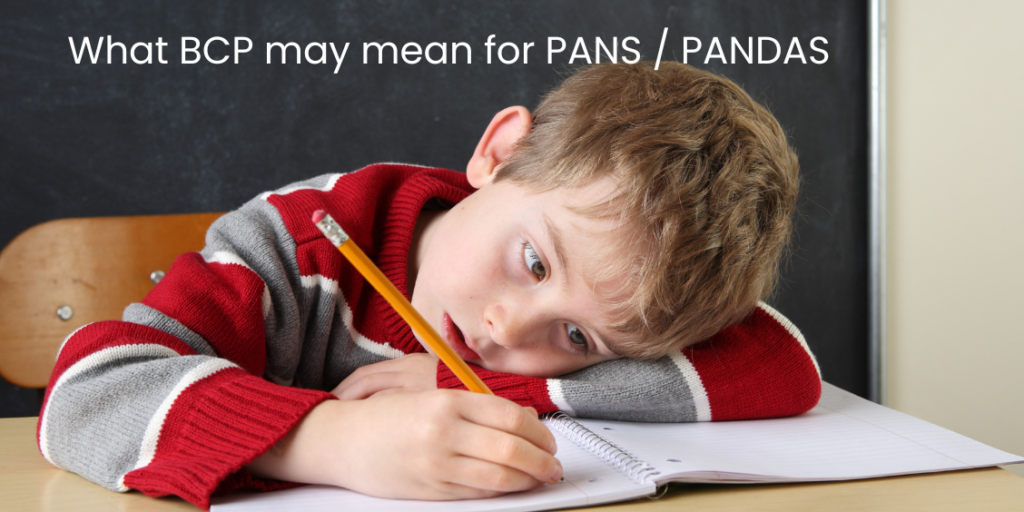
We love having our “boots on the ground” at markets and events, because that’s when we get to meet people that have been dealing with issues or conditions that keep them on the lookout for safe, effective alternatives that don’t have contraindications. It’s also when we get to hear the names of some conditions that are not widely spoken about and, frankly, we have never heard of before. One such condition was PANS or PANDAS.
Families living with PANS or PANDAS are faced with a complex and overwhelming condition. This condition involves sudden changes in behaviour, mood, cognition, and physical health—often linked to immune and inflammatory responses in the brain.
Kidshealth.org says that – “the most common cause of a severe onset of OCD and tics is a group A streptococcus (“strep”) infection. When it’s clear that a child’s symptoms are linked to a strep infection (like strep throat), it’s called PANDAS. It stands for Pediatric Acute-onset Neuropsychiatric Disorders Associated with Streptococcus.
PANS is when the severe onset of OCD symptoms is linked to another infection. These include the flu, chickenpox, mycoplasma, and Lyme disease. PANS stands for Pediatric Acute-onset Neuropsychiatric Syndrome”.
They also state – “Experts believe PANDAS and PANS happen because of a problem with the immune system’s response to an infection. Instead of attacking the germs, the immune system targets a part of the brain by mistake. This part of the brain is called the basal ganglia. It affects thoughts, feelings, movement, and other behaviors. Experts believe irritation in this part of the brain leads to the symptoms.” D’Arcy Lyness PHD, July 2021
They also mention that parents often say that their child seemed to “change overnight”. How sad and traumatic for the whole family!
So of course, we have been asked if our Beta Caryophyllene products could help with the symptoms. In my endeavour to find out more, I found that while research is still evolving, emerging evidence from related conditions is offering encouraging clues about potential supportive options. So let’s start with a recap on what BCP is.
Beta-caryophyllene is a naturally occurring compound found in everyday plants like black pepper, cloves, rosemary, and cannabis (hemp). Unlike THC, it is non-psychoactive, meaning it does not cause a “high.” What makes BCP unique is that it directly activates the CB2 receptor, a key part of the body’s immune and inflammation-regulating system.
At this stage, no studies have directly examined BCP in PANS or PANDAS. However, when researchers look at conditions with similar underlying mechanisms—such as neuroinflammation, autoimmune activity, and immune-driven brain changes—the results are compelling.
Across multiple studies involving neurological and autoimmune models, BCP has shown consistent and meaningful effects.
Inflammation plays a central role in many immune-driven neurological conditions. In research models, BCP was shown to
In simple terms, BCP appears to help turn down excessive immune signals without shutting the immune system off completely.
In neurological models, BCP demonstrated protective effects inside the brain itself:
These findings matter because neuroinflammation and immune activation in the brain are central features believed to contribute to PANS and PANDAS symptoms.
One of the most relevant findings comes from an autoimmune arthritis model, where disease is driven by autoantibodies triggering inflammation—a mechanism that closely mirrors what is suspected in PANDAS.
In this model, BCP significantly:
This suggests BCP may have the capacity to support immune regulation, not just symptom relief.
Equally important is BCP’s strong safety profile:
This makes BCP particularly appealing as a gentle, well-tolerated option worthy of further exploration.
(n.d.). Improvement of Oxidative Stress and Mitochondrial Dysfunction by β-Caryophyllene: A Focus on the Nervous System. https://doi.org/10.3390/antiox10040546 – 2021
While we are still waiting for direct clinical studies in PANS and PANDAS, the existing research paints a hopeful picture. Beta-caryophyllene (BCP) shows the ability to calm immune overactivity, reduce inflammation in the brain, protect neural function, and safely support the body’s own regulatory systems.
For families navigating these challenging conditions, findings like these remind us that science is steadily uncovering new possibilities—and that natural compounds with targeted, evidence-based actions may play an important role in future care.
As always, any new supplement or intervention should be discussed with a qualified healthcare practitioner, especially in complex immune-based conditions.
The research journey continues—but the signs so far are encouraging. 
In the meantime, here’s a link to a helpful website in Australia-https://pansaustralia.com/what-is-pans-pandas/
Sources: Kidshealth.org, https://doi.org/10.3390/antiox10040546, https://doi.org/10.3390/antiox10040546, https://doi.org/10.3390/biom9080326, https://doi.org/10.3390/antiox10040546
| Shop Now |
| Disclaimer: The information in this post is for reference purposes only and not intended to constitute or replace professional medical advice or personal research. Please consult a qualified medical professional before making any changes to your diet, medications or lifestyle. Effects are provided as a guide only. Statements have not been evaluated by the TGA. |
Muscle Inflammation Last week, we talked about workout recovery. We looked at the effect of sleep and stress on our recovery and how Canna Oils BCP could

Canna Oils – helping with your workout recovery! TIPS FOR FASTER WORKOUT RECOVERY Of course, there are lots of things to help with muscle recovery

Can Beta-Caryophyllene Help Support Someone Living with Lyme Disease? Living with Lyme disease can be physically and emotionally demanding. After the initial infection of the

This is one of the most common questions we’re asked — and it’s a great one. Because Canna Oils Ultra and Sleep In A Bottle

Should I stop taking my Ultra BCP before Surgery? Quite often people are advised to stop taking anti-inflammatory medications before surgery, so it’s completely reasonable